
'I cannot cope with the demand. It will take us a couple of months to ramp up production.'

Chingari, Roposo, Khabri and Trell are seeing huge traction as people are looking at options to earn incentives from home. Music streaming app Gaana, which is strongly placed in the market with 150 million users, recently opened up its short video platform for subscribers.

There are several discussions going around in the e-health sector for consolidation with key players being PharmEasy, 1mg, Medlife and Netmeds. According to reports, Reliance Jio is in talks with Netmeds to acquire the latter.
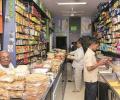
The demands from retailers are fourfold: One, allow kiranas, general trade stores, supermarkets, hypermarkets, and wholesalers to operate every day of the week till 9 pm. Two, ensure uniform and regular opening of all categories of retail. Three, hassle-free movement of goods and employees, and four, lift bans on malls in states like Maharashtra.
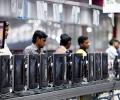
It was expected that supplies from China will be back to normal by end-June as their factories are now operating at nearly 90 per cent of normal capacity. But the recent issue with shipments has placed an obstacle that manufacturers can't bypass.

The idea behind starting Chingari is not to build a TikTok clone but to position itself as a super app for India like WeChat.

While participation of start-ups in the space sector has largely been minimal so far, their involvement will be key towards building India's very own aerospace companies such as Maxar, Elon Musk's SpaceX and Rocket Labs, according to experts.

The smartphone category as a whole was expected to spend around Rs 1,000 crore on marketing and promotional activities over the next six months, even as India unlocks gradually, said media industry experts. This spending is expected to come down, as firms temper their launches.

To stay on course with their academic calendars, several steps for graduating batches and fresh incoming batches are being taken.

People in the know said that from social and digital media campaign teams to communications specialists -- all hands were on deck, and every possible post or campaign with the potential to intensify the crisis, was being tracked.

Among the options being weighed are discounts on existing rentals, short-term deferrals, and 50 per cent waivers.

As several premium hotels such as ITC, Taj and Oberoi reopen after the lockdown in cities such as Bengaluru, Kolkata and Hyderabad, many changes have been made for the safety of guests and staff including temporary closure of spas, bars, gyms, and swimming pools.

Steel, cement, aluminum, fertilisers, tractors, two-wheelers, beverages and carbonated drinks, tyres and FMCG could see demand back to near normal levels by the third or the fourth quarter of the financial year, or even earlier.

The Confederation of All India Traders has approached Union Home Minister Amit Shah, Union Health Minister Harsh Vardhan, Delhi Lieutenant Governor Anil Baijal, and Chief Minister Arvind Kejriwal, and urged them to shut markets in Delhi.

From fast food and athleisure to ACs, the demand for several non-discretionary items has spiked since May 17, when Lockdown 4.0 was extended till May 31.

From auto, refrigerator, and mobile handset makers to real estate firms, companies are tying up with banks to dole out attractive finance schemes and discounts to make buying more affordable.

In 2019, the growth in sales of the Maggi brand of products surpassed the pre-ban level of 2014, in terms of both volume and value. While, Nestle raised prices of Maggi products by an average 3.1 per cent, its volume rose by 9.6 per cent year-on-year.

The coronavirus pandemic has changed how businesses look at payments. Earlier, fintech companies said when they were talking to merchants, they were not interested in digitisation.

'While OTTs are a reality, big film producers will prefer a theatrical release before a digital one.'
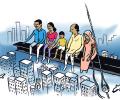
Developers are cautious about the timing of launches in the near term, given the relative uncertainty in demand pick-up and logistical challenges during the lockdown. However, affordable housing projects slated for the first quarter (Q1) of 2020-21 (FY21) may get launched this quarter itself.
 © 2026 Rediff.com - Advertise with us - Disclaimer - Privacy Policy - Sitemap - Feedback - About us - Terms of use - Grievances